Short books, big arguments.
Prickly Paradigm Press is an independent press dedicated to reviving the pamphlet — sharp perspectives from serious thinkers, written to shape public debate on questions that matter.
Latest Releases
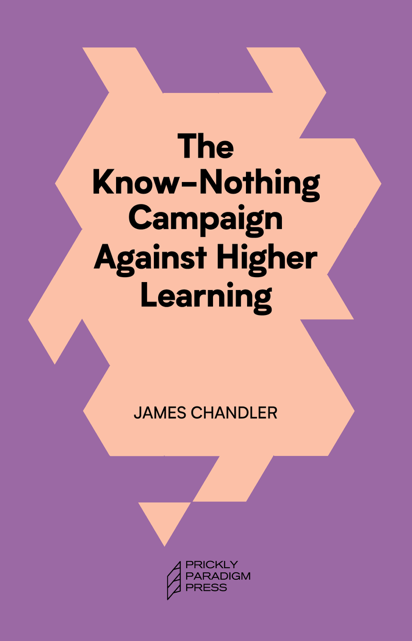
The second Trump administration has committed itself to upending the knowledge systems and deliberative institutions that have been essential to modern democracy, with the American university — site of scientific research and liberal education — a primary target. In The Know-Nothing Campaign Against Higher Learning, literary and film critic James Chandler spotlights an American tradition of such hostility to intellectual life, especially the nativist movement of the 1850s that persecuted Catholic immigrants from Ireland and Germany. Ironically, Steve Bannon, the self-proclaimed “Know-Nothing vulgarian” who long ago recruited candidate Trump to his anti-intellectual crusade, is himself the great-grandson of an Irish immigrant who would have faced Know-Nothing backlash in that era.
Such dark ironies define our moment, Chandler argues, and they call out not only for intellectual critique but also for satire. Yet in the midst of the MAGA campaign’s calamitous effects on American public discourse, even satire must confront the “kayfabe” practices imported by Trump from professional wrestling, which mix illusion and reality to turn political life into a “spectacle without thought.” Drawing widely on cultural critics from Jonathan Swift and Alexis de Tocqueville to Roland Barthes, Chandler’s pamphlet offers an elegant and bracing account of the MAGA campaign against higher learning and its transformative effects on criticism and democracy itself.
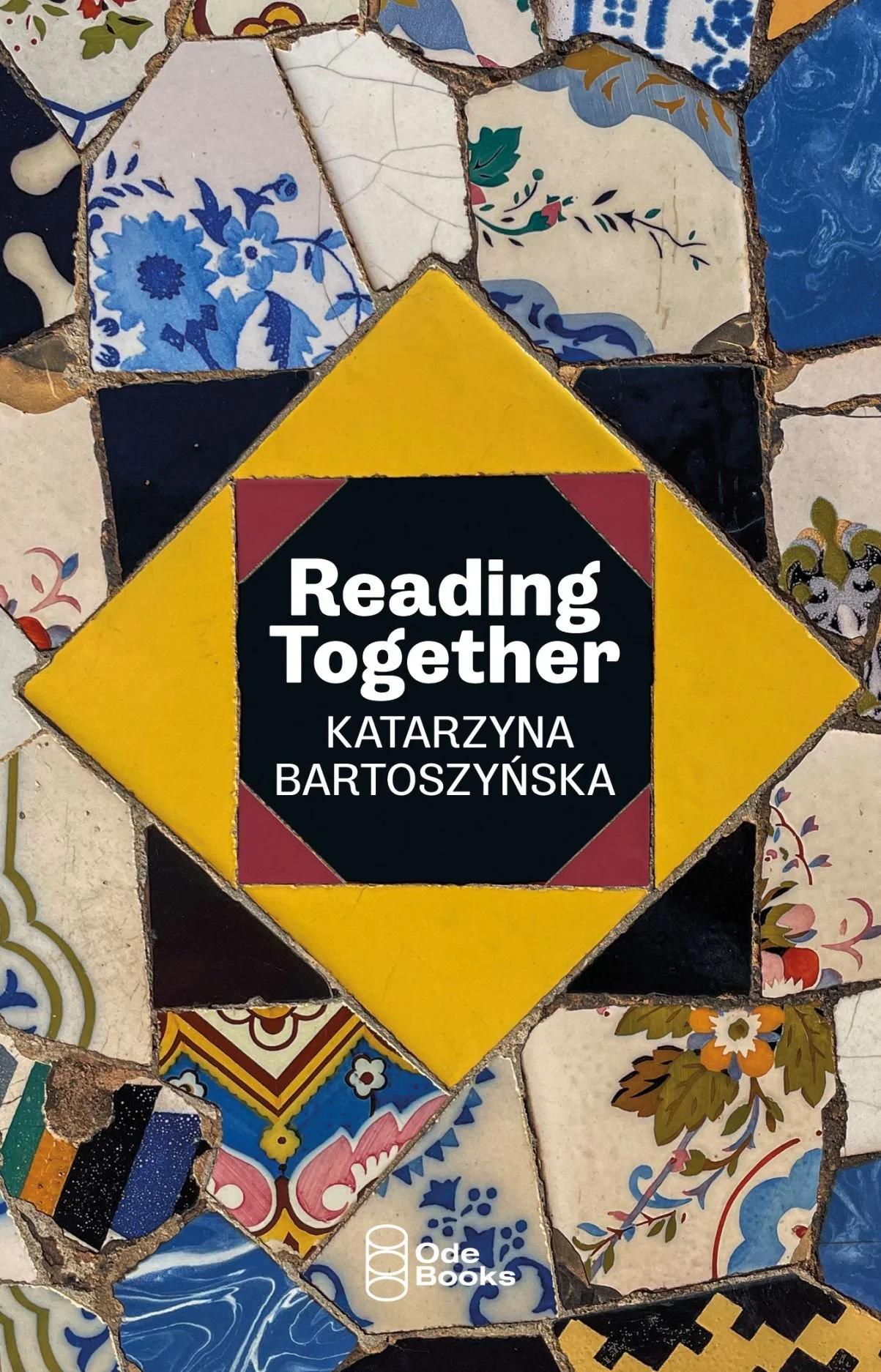
A lively and thoughtful exploration of how book clubs change the way we read. In this engaging and vivacious memoir, college professor Katarzyna Bartoszyńska thinks back on various book clubs she has been a part of. Through brief discussions of a variety of novels, memoirs, and nonfiction works such as Ottessa Moshfegh's My Year of Rest and Relaxation, Marjane Satrapi's Chicken with Plums, and Alma Guillermoprieto's Dancing in Cuba, she considers how the things she has learned in book club discussions differ from what she tries to teach students in her literature classes. As she muses on the various benefits that we imagine reading offers, she describes the unique knowledge that book clubs can provide.
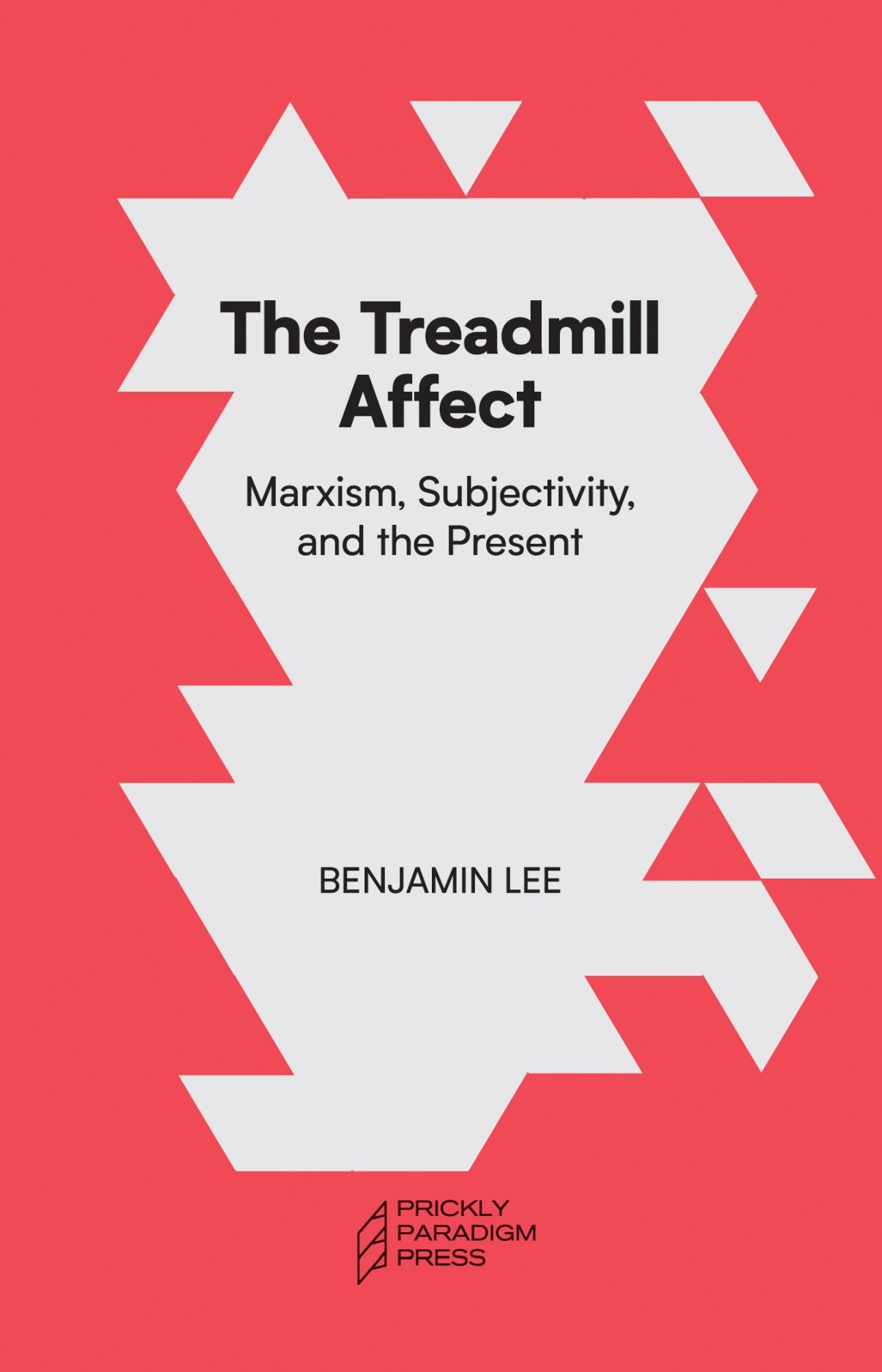
A critical synthesis of the work of Lauren Berlant, Moishe Postone, and Michael Silverstein. The Treadmill Affect draws upon the work of three University of Chicago professors, each a former program director at the Center for Transcultural Studies. Through this intellectual synthesis, Benjamin Lee demonstrates the critical possibilities of uniting a revived linguistic turn with Marxist accounts of affect and subjectivity, adding new dimensions to the “treadmill” affective structure of cruel optimism.
Recent Prickly Dispatches
Our editorial supplement featuring commentary on new and old pamphlets, announcements and news from the press, and more from our editors, authors, and collaborators.
Selections from the Backlist

The “Great Acceleration” describes a set of interrelated human-driven transformations of Earth’s systems, including the eightfold population growth since 1800. Yet ideas about population in the epoch many call the Anthropocene sit uncomfortably in contemporary discussions.
How Do We Think About Population in the Anthropocene? brings together the world’s key thinkers in Anthropocene studies from a wide range of disciplines, including geology, geography, demography, history, political theory, and more. How do we think about population in the Anthropocene, or should we even think in terms of population at all? The twelve short essays in this pamphlet offer responses that reimagine how we think about economy, environment, consumption, reproduction and extinction.
The second Trump administration has committed itself to upending the knowledge systems and deliberative institutions that have been essential to modern democracy, with the American university — site of scientific research and liberal education — a primary target. In The Know-Nothing Campaign Against Higher Learning, literary and film critic James Chandler spotlights an American tradition of such hostility to intellectual life, especially the nativist movement of the 1850s that persecuted Catholic immigrants from Ireland and Germany. Ironically, Steve Bannon, the self-proclaimed “Know-Nothing vulgarian” who long ago recruited candidate Trump to his anti-intellectual crusade, is himself the great-grandson of an Irish immigrant who would have faced Know-Nothing backlash in that era.
Such dark ironies define our moment, Chandler argues, and they call out not only for intellectual critique but also for satire. Yet in the midst of the MAGA campaign’s calamitous effects on American public discourse, even satire must confront the “kayfabe” practices imported by Trump from professional wrestling, which mix illusion and reality to turn political life into a “spectacle without thought.” Drawing widely on cultural critics from Jonathan Swift and Alexis de Tocqueville to Roland Barthes, Chandler’s pamphlet offers an elegant and bracing account of the MAGA campaign against higher learning and its transformative effects on criticism and democracy itself.
A lively and thoughtful exploration of how book clubs change the way we read. In this engaging and vivacious memoir, college professor Katarzyna Bartoszyńska thinks back on various book clubs she has been a part of. Through brief discussions of a variety of novels, memoirs, and nonfiction works such as Ottessa Moshfegh's My Year of Rest and Relaxation, Marjane Satrapi's Chicken with Plums, and Alma Guillermoprieto's Dancing in Cuba, she considers how the things she has learned in book club discussions differ from what she tries to teach students in her literature classes. As she muses on the various benefits that we imagine reading offers, she describes the unique knowledge that book clubs can provide.
A critical synthesis of the work of Lauren Berlant, Moishe Postone, and Michael Silverstein. The Treadmill Affect draws upon the work of three University of Chicago professors, each a former program director at the Center for Transcultural Studies. Through this intellectual synthesis, Benjamin Lee demonstrates the critical possibilities of uniting a revived linguistic turn with Marxist accounts of affect and subjectivity, adding new dimensions to the “treadmill” affective structure of cruel optimism.

A memoir of reading and working with books by the renowned Booklist editor. With the infectious curiosity of an inveterate bibliophile and the prose of a fine stylist, Donna Seaman charts the course of her early reading years in a book-by-book chronicle of the significance books have held in her life. River of Books recounts Seaman’s journey in becoming an editor for Booklist, a reviewer, an author, and a literary citizen, and lays bare how she nourished both body and soul in working with books. Seaman makes palpable the power and self-recognition that she discovered in a life dedicated to reading.
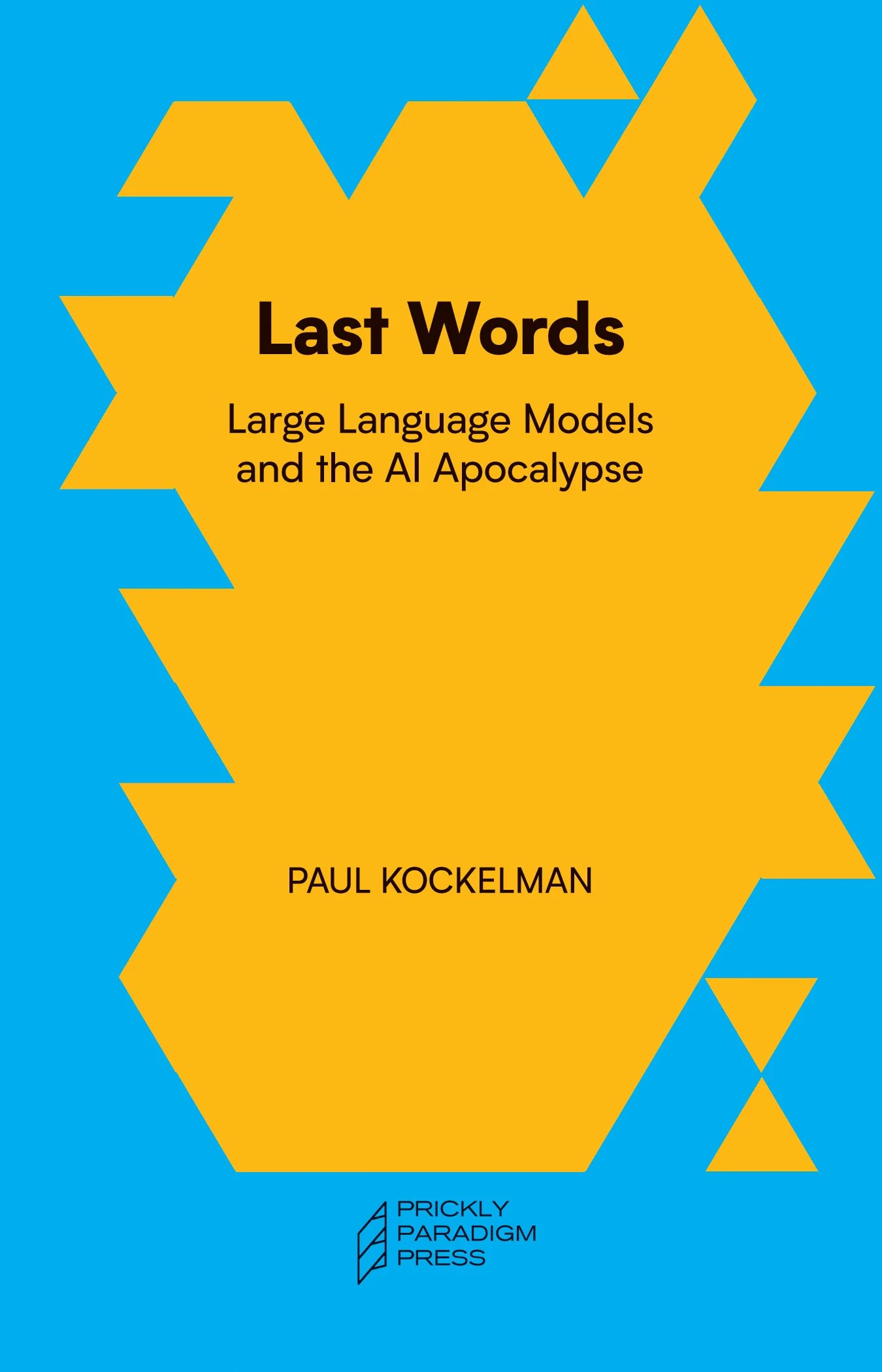
What kind of meaning can machines make — and why does it matter that it’s not the same as ours?
Anthropologist Paul Kockelman's Last Words (2024) offers a rigorous but accessible account of how large language models actually work — and why the meaning they produce is fundamentally different from human meaning-making. Drawing on the semiotics of C.S. Peirce, Kockelman’s witty and insightful pamphlet shows how LLMs are trained to predict word-word relations, not word-world relations, which explains both their uncanny fluency and their systematic blind spots. The result is a compact, essential guide to cutting through the hype: not a dismissal of AI, but a precise account of what it can and cannot do — and who profits from the confusion.
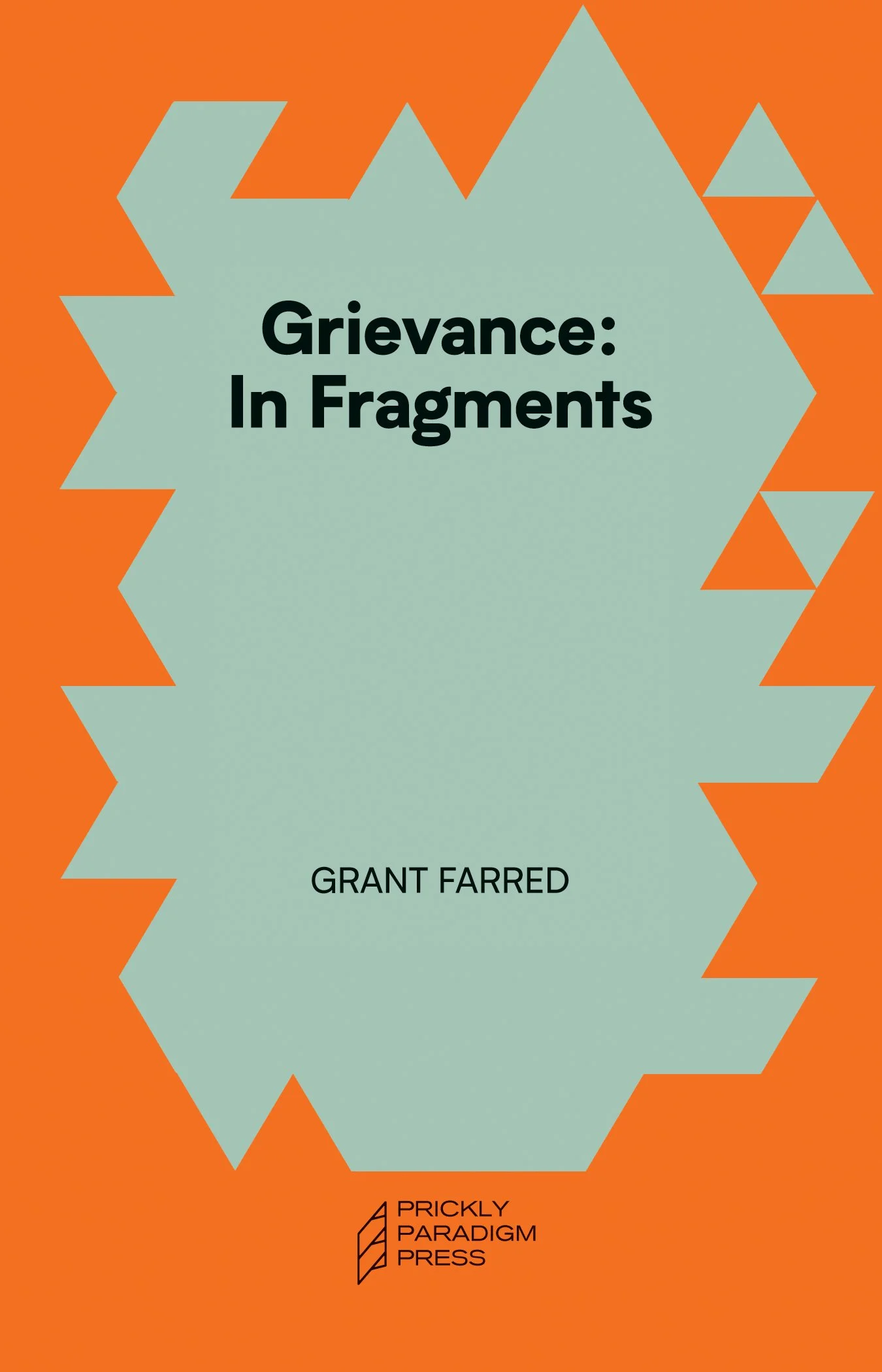
America. From the twenty-seven complaints against George III in the Declaration of Independence to the surrender of the Confederate Army at Appomattox to the storming of the Capitol on January 6, grievance has been constitutive of white American identity, even if it has been rarely self-acknowledged.
Grievance: In Fragments is an unusual pamphlet, combining short aphorisms and longer fragments to explore the resentment, grudge, and complaint that run through the white American story. The pieces echo, extend, and frequently contradict one another as they range from Thomas Jefferson to Robert E. Lee to the QAnon Shaman and other uncivil defenders of civil society. Farred sets grievance against grief, which opens us to others' losses where grievance answers only to its own. Can grief take in the aggrieved without turning into grievance?
Philosophical, irreverent, and deeply unsettling, Grievance is to be savored, less an argument than a pamphlet where each thought stands alone yet is undone by the next.

Reading the Room is Paul Yamazaki’s love letter to the work of bookselling and an engaged life of the mind. Over twenty-four hours, Yamazaki leads us through the stacks of storied City Lights Booksellers in San Francisco; the care and prowess of his approach to book buying; his upbringing in a Japanese American family in Southern California and moving to San Francisco at the height of revolutionary foment; working with legendary figures in the book publishing industry like Lawrence Ferlinghetti, Sonny Mehta, and others; and his vision for the future of bookselling. Navigating building trust with readers and nurturing relationships across the literary industry, Yamazaki testifies to the value of generosity, sharing knowledge, and dialogue in a life devoted to books.
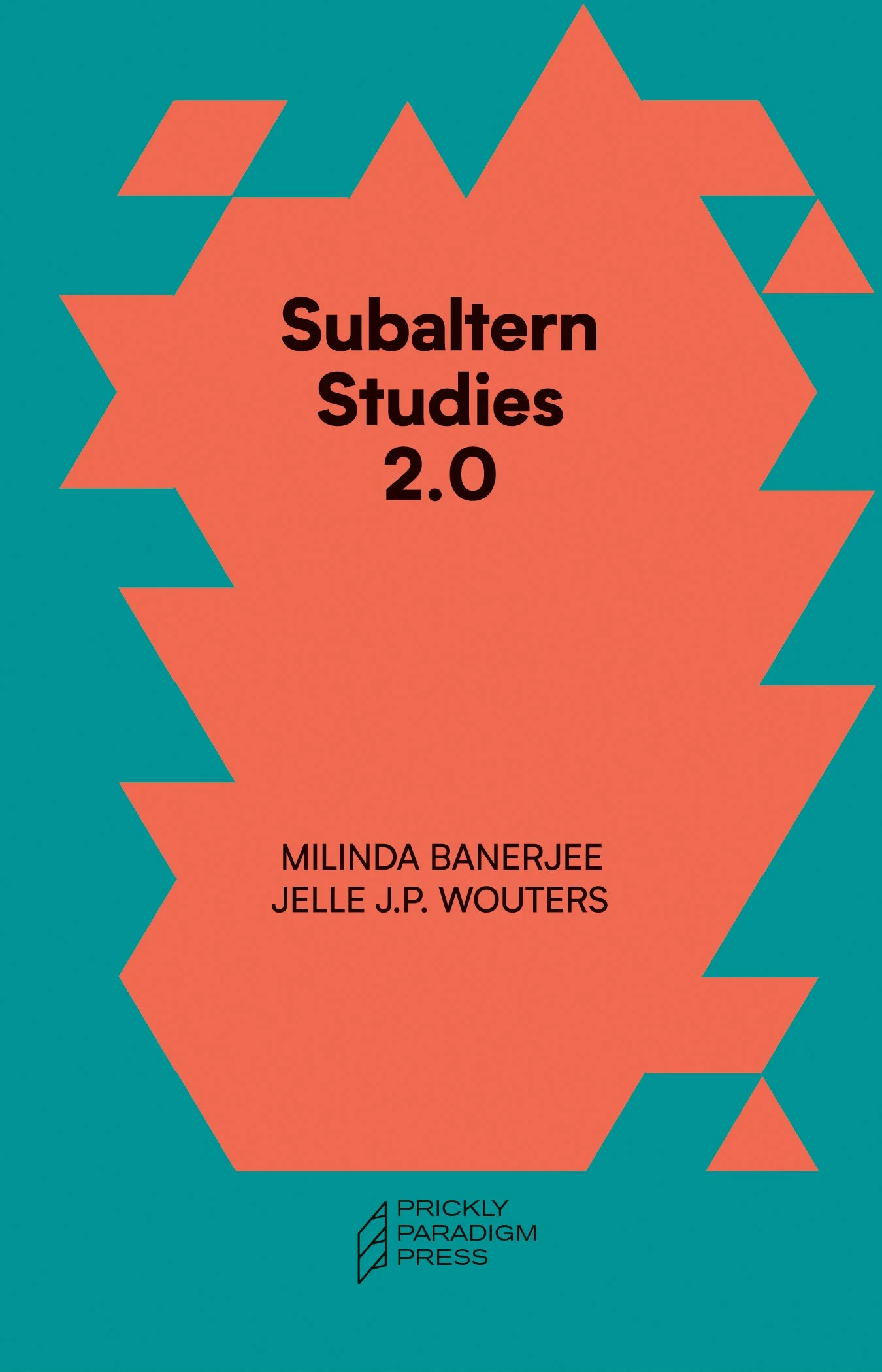
With Essays by Gayatri Chakravorty Spivak, Marisol de la Cadena, Thom Van Dooren, and Suraj Yengde
State and Capital reign over the Age of Sorrow. We face inequality, pandemics, ethnocide, climate crisis, and mass extinction. Our desire for security and power governs us as State. Our desire for possessions governs us as Capital. Our desires imprison and rule us beings as Unbeing. Yet, from Nagaland to New Zealand, Bhutan to Bolivia, a second wave of anti-colonial revolutions has begun. Arising from assemblies of humans and other-than-humans, these revolutions replace possessive individualism with non-exploitative interdependence. Naga elders, Bhutanese herders and other indigenous communities, feminists, poets, seers, yaks, cranes, vultures, and fungi haunt this pamphlet. The original Subaltern Studies narrated how Indian peasant communities destroyed the British empire. Subaltern Studies 2.0 prophesies the multi-being demos and liberates Being from Unbeing. Re-kin, Re-nomad, Re-animate, Re-wild! The Animist Revolution has come.
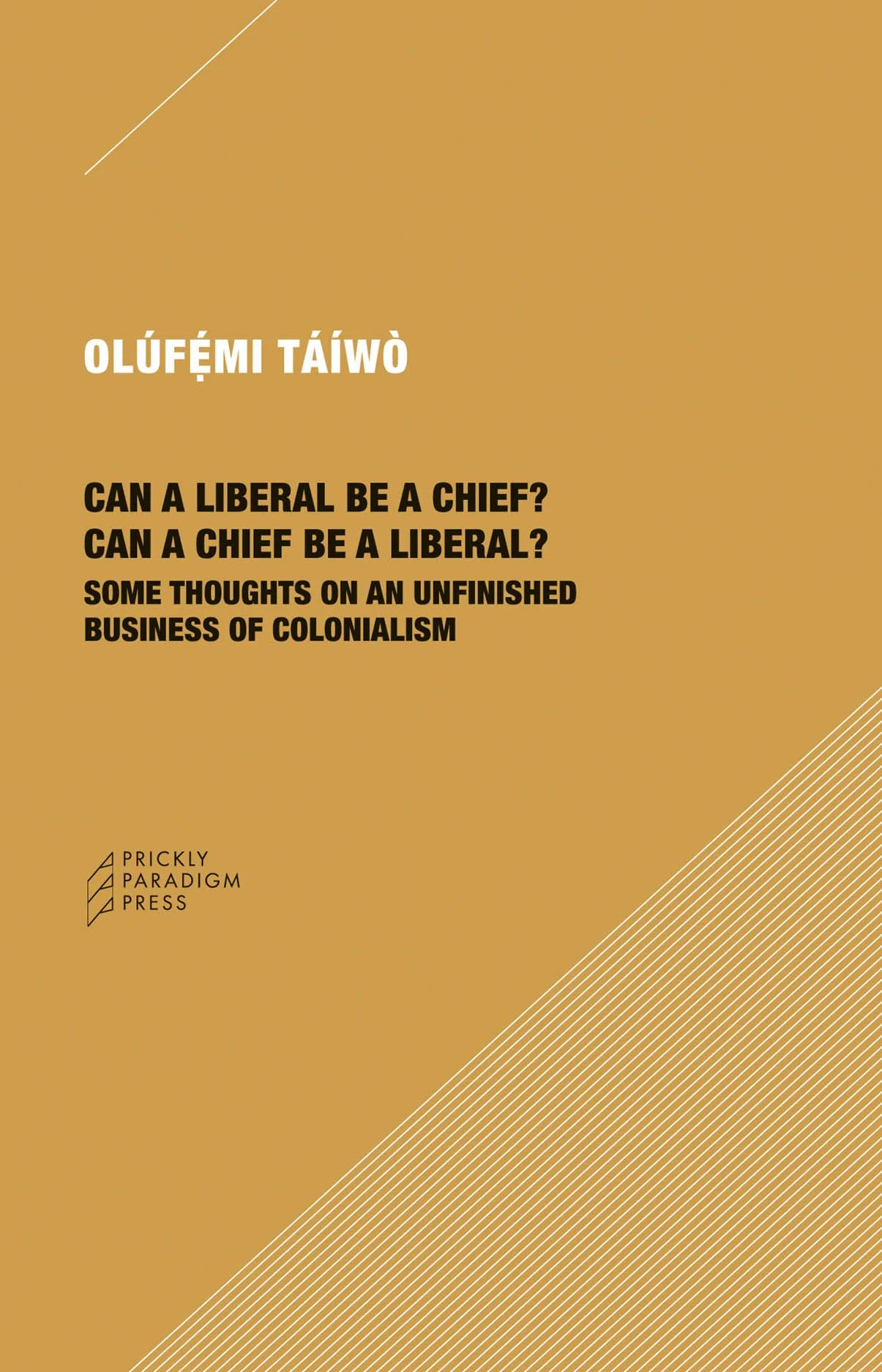
Across Africa, it is not unusual for proponents of liberal democracy and modernization to make room for some aspects of indigenous culture, such as the use of a chief as a political figure. Yet for Olúfẹ́mi Táíwò, no such accommodation should be made. Chiefs, he argues, in this thought-provoking and wide-ranging pamphlet, cannot be liberals—and liberals cannot be chiefs. If we fail to recognize this, we fail to acknowledge the metaphysical underpinnings of modern understandings of freedom and equality, as well as the ways in which African intellectuals can offer a distinctive take on the unfinished business of colonialism.
The “Great Acceleration” describes a set of interrelated human-driven transformations of Earth’s systems, including the eightfold population growth since 1800. Yet ideas about population in the epoch many call the Anthropocene sit uncomfortably in contemporary discussions.
How Do We Think About Population in the Anthropocene? brings together the world’s key thinkers in Anthropocene studies from a wide range of disciplines, including geology, geography, demography, history, political theory, and more. How do we think about population in the Anthropocene, or should we even think in terms of population at all? The twelve short essays in this pamphlet offer responses that reimagine how we think about economy, environment, consumption, reproduction and extinction.